Why Trucks and SUVs in Kingsport Need Window Tinting More Than Sedans
Trucks and SUVs need window tinting more than sedans because they carry far more glass. More glass means more solar heat in a larger cabin, more UV landing on rear-seat passengers, more interior surface to fade, and more of your gear sitting in plain view.
That part is easy, and most articles stop there. What catches Kingsport owners out is what Tennessee actually allows on a truck or SUV, which is not what drivers in most other states get. If you are planning
auto window tinting in Kingsport on a crew cab or a three-row SUV, here is what changes.
More Glass Means a Different Problem, Not Just a Bigger One
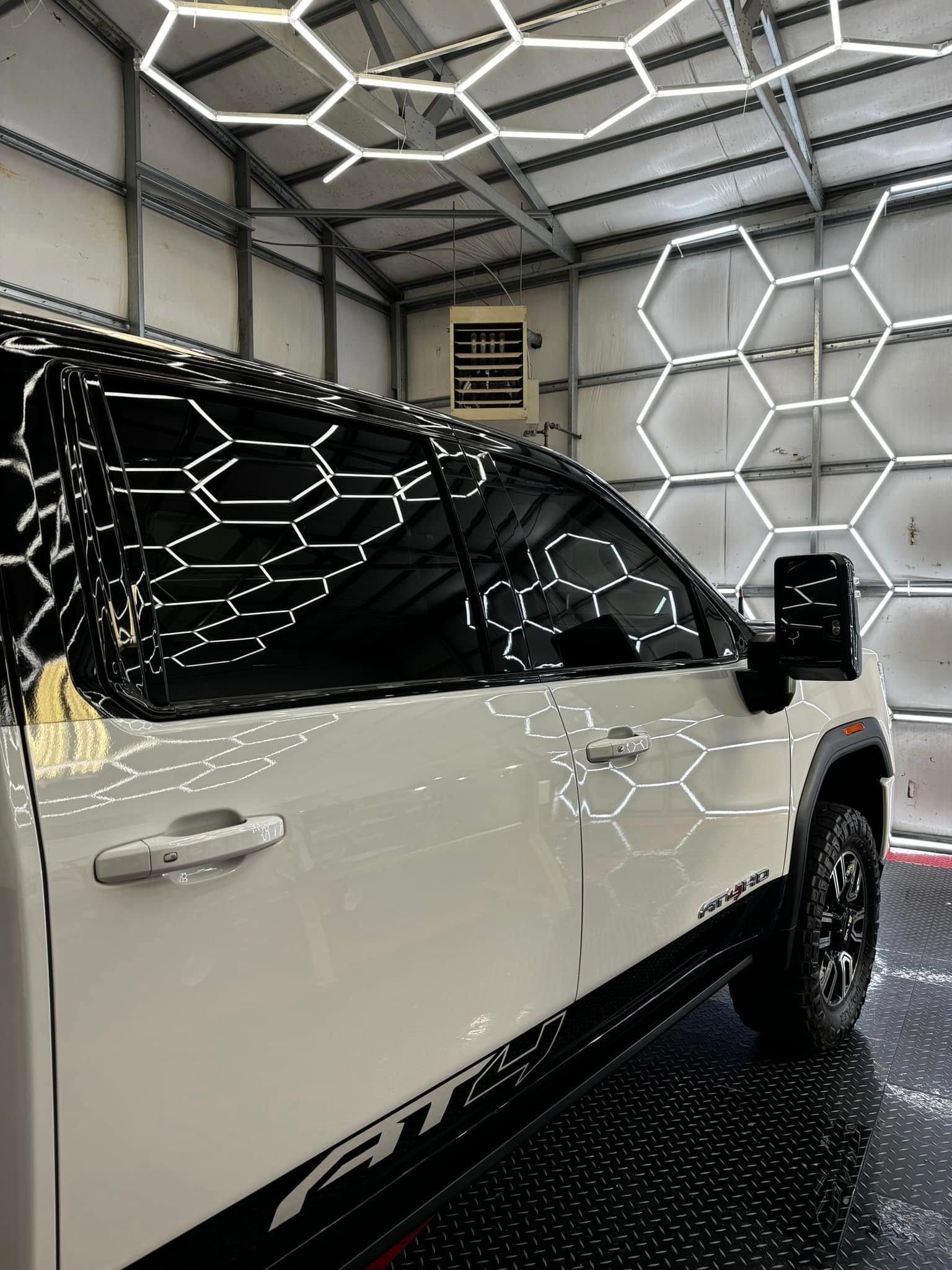
Count the glass on a crew cab or full-size SUV. A tall windshield, four full-height side windows, rear quarter glass, a large rear window or hatch, and often a panoramic roof. On many trucks, that is closer to half again as much glass as a mid-size sedan, and it shows up four ways.
- More heat to remove. A bigger glass envelope collects more solar energy, and a bigger cabin holds more superheated air, so the air conditioning works harder and longer.
- More UV on the people in back. Kids in second and third-row seats sit directly against the largest windows on the vehicle.
- More interior to protect. A larger dash, more seat rows, and more trim mean more surface fading under the same sun.
- More on display. Tools under a bed cap, gear in a cargo area, and a car seat in the second row. Smash-and-grab theft is opportunistic, and it starts with somebody seeing something.
The Three Zones of a Truck or SUV
Most tint advice splits a vehicle into front and rear. On a truck or SUV that is too blunt. There are three zones, each with a different problem and a different right answer.
The driver zone
Windshield and front doors. Tennessee law is strictest here, with no flexibility at all. It is also where glare causes real trouble, because you sit high in a truck, and low morning and evening sun on I-26 and I-81 arrives at eye level through side glass rather than over the hood. Heat rejection and glare control matter far more here than darkness. That same sun works on your paint, which is where paint correction comes in.
The passenger zone
Rear doors and quarter glass. This is where passengers sit, and on a three-row SUV the quarter glass behind the second row is often the largest panel on the vehicle. Most trucks and SUVs already have factory privacy glass here, which changes the math in a way we explain next. The film in this zone is about UV and heat for the people in the seats and about keeping the interior from fading.
The cargo zone
Rear hatch, third-row glass, and bed cap windows. The glass is largest here and the heat load highest, and nobody is sitting back there to complain. Visibility works against you too, because anything you can see from the parking lot, so can everyone else. Cargo tint is a security decision as much as a comfort one.
What Tennessee Law Actually Allows on a Truck or SUV
Here is where Tennessee treats trucks and SUVs differently from almost everywhere else, and not in the direction most owners expect.
Tennessee window tint is governed by Tennessee Code Annotated section 55-9-107. The core rule is that it is unlawful to operate a vehicle on a public road with any window treated with material having a visible light transmittance of less than 35 percent. The statute's language covers any window. On the windshield, aftermarket material may not drop transmittance below 70 percent, with the manufacturer's standard shade band as the exception.
In most states, SUVs, vans, and pickups are classified as multipurpose vehicles and get much darker glass behind the driver. Tennessee does not set up that split the way drivers assume.
It exempts vehicle models that federal regulations permit to have certain non-conforming windows, with respect to those specific windows, which is the provision covering factory privacy glass. But it is explicit that nothing in that exemption reaches the front door windows of any motor vehicle of any kind.
So the practical answer is this. Your front doors are capped at 35 percent no matter what you drive. Behind the driver, it depends on what came from the factory and how film stacks on top of it, which is best settled with a meter on your actual glass. That is a conversation we have with every truck and SUV that comes through the shop. Tennessee also allows a medical exemption through a physician's certified statement and the department's medical review board.
Your Factory Privacy Glass Is Already Doing Something
Nearly every truck and SUV leaves the factory with privacy glass on the rear windows, and it is the most common reason an owner ends up darker than intended.
Factory privacy glass is dyed into the glass itself, not a film applied to it. It cuts visible light but does very little to stop infrared heat, which is why the cargo area of an SUV with dark factory glass still bakes in August. The privacy is real. The heat rejection mostly is not.
Second, film stacks. If your factory glass already sits well below clear and you add a 35 percent film on top, the metered result lands below either number on its own. Owners are regularly surprised because they asked for a legal film and got a reading that is not.
The fix is simple. Have the rear glass metered before a film is chosen, then pick a lighter film back there than you would use on bare glass. You still get the infrared rejection the factory glass never gave you, without pushing the combined reading somewhere you did not intend.
Why the Film Matters More Than the Shade
VLT, visible light transmission, measures how much visible light gets through. It is what the law regulates and what people mean when they call a tint dark. But visible light is only part of the solar energy hitting your vehicle. Infrared is what you feel as heat, and VLT tells you almost nothing about how much of it a film blocks. Two films at identical darkness can perform completely differently.
The film ladder, briefly. Dyed film is cheapest and fades. Metalized rejects heat well but can interfere with GPS, cell signal, and key fobs, a real problem in a modern truck. Carbon performs well without that interference. Nano ceramic sits at the top for infrared rejection and clarity.
Put those together and Tennessee's rule stops looking like a restriction. If darkness is capped, the only lever left is film technology, and that lever was doing the real work all along. A quality ceramic film at a legal shade outperforms a cheap dark film on heat every time, especially on this much glass. That is why we run GeoShield, and why GeoShield Apex Ultra, a dual-layer nano ceramic, tops our lineup. The same logic applies to the paint, which
ceramic coating handles.
What Makes a Truck or SUV Harder to Tint
Bigger vehicles are not just more film. They are a more difficult film.
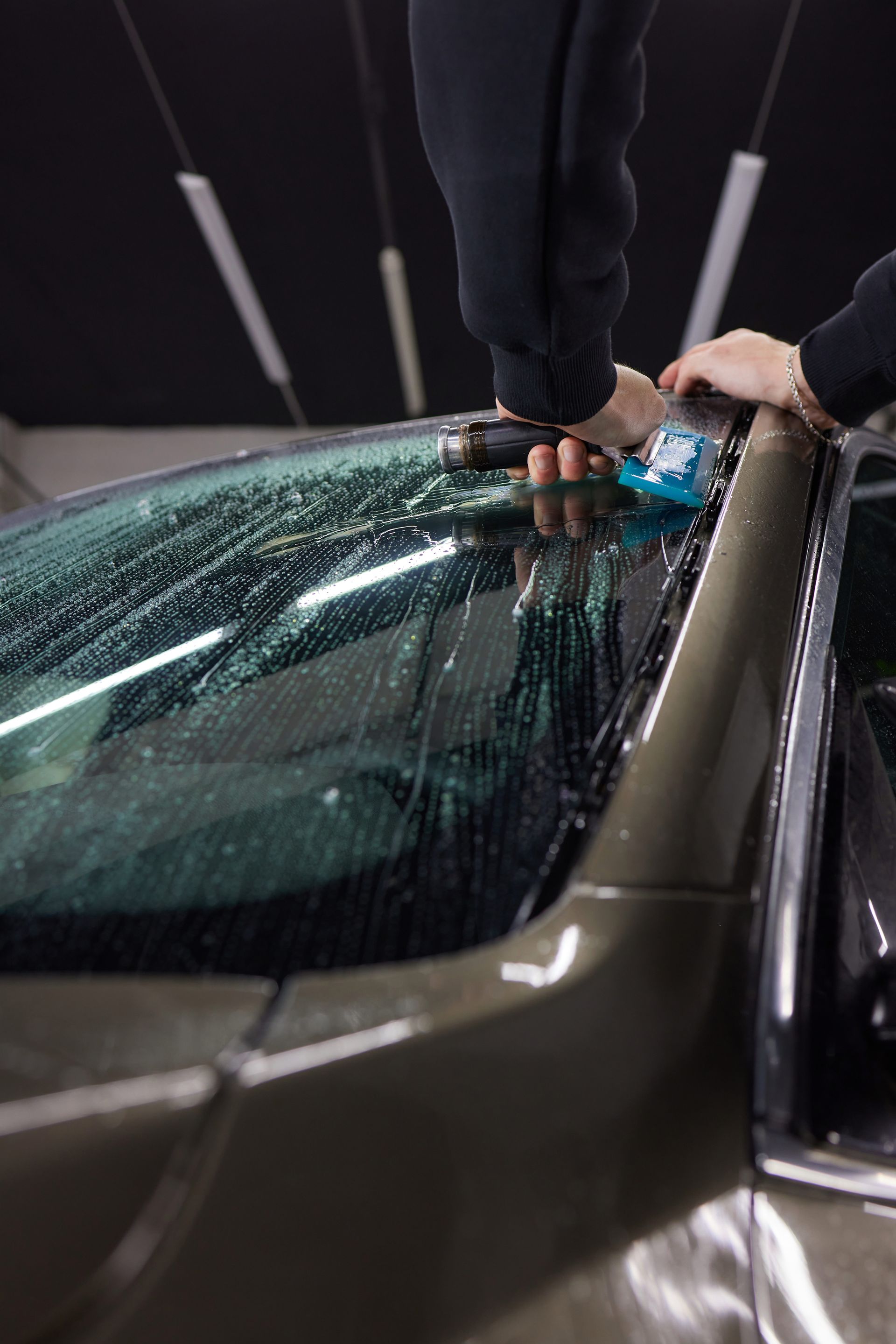
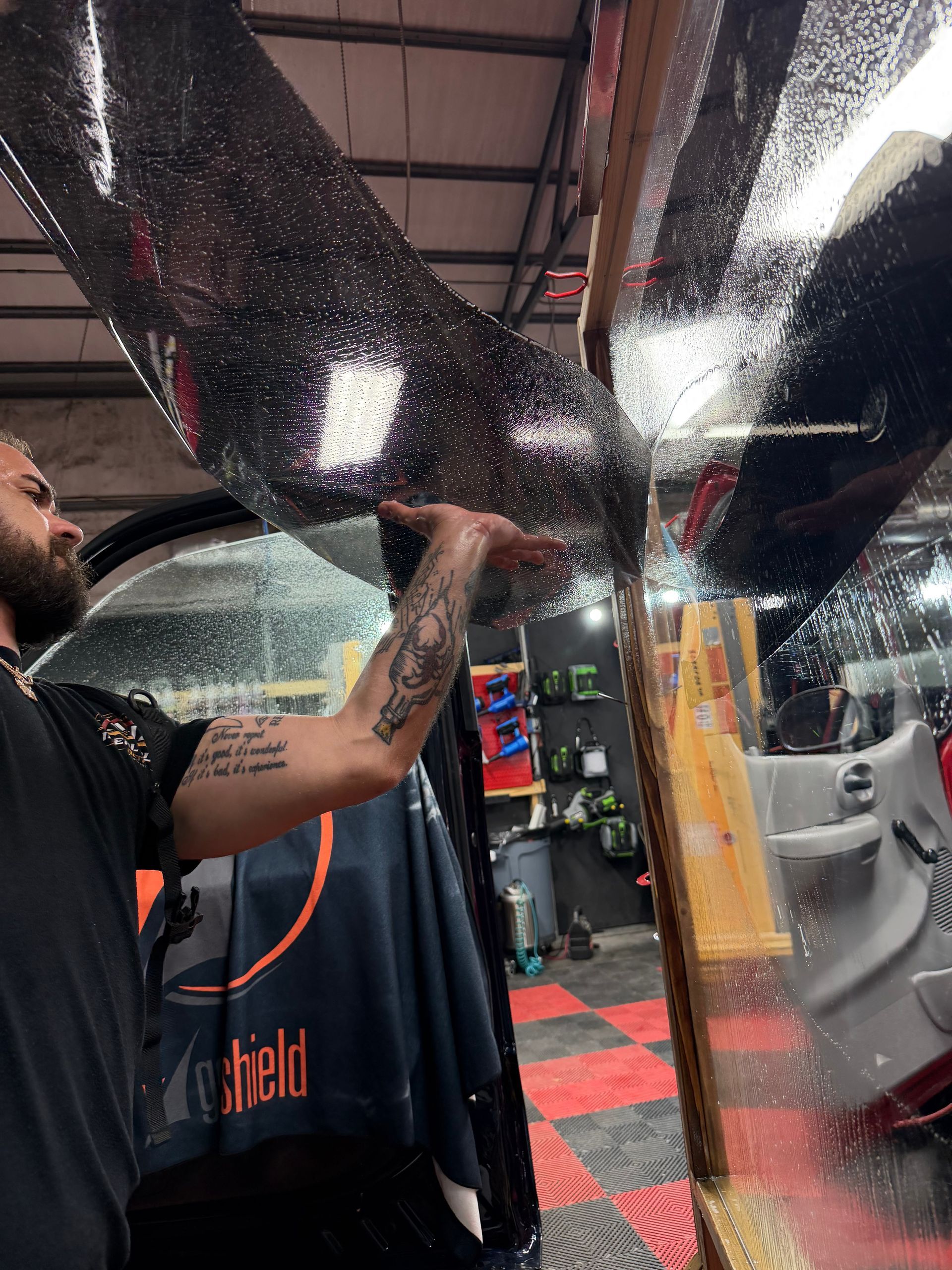
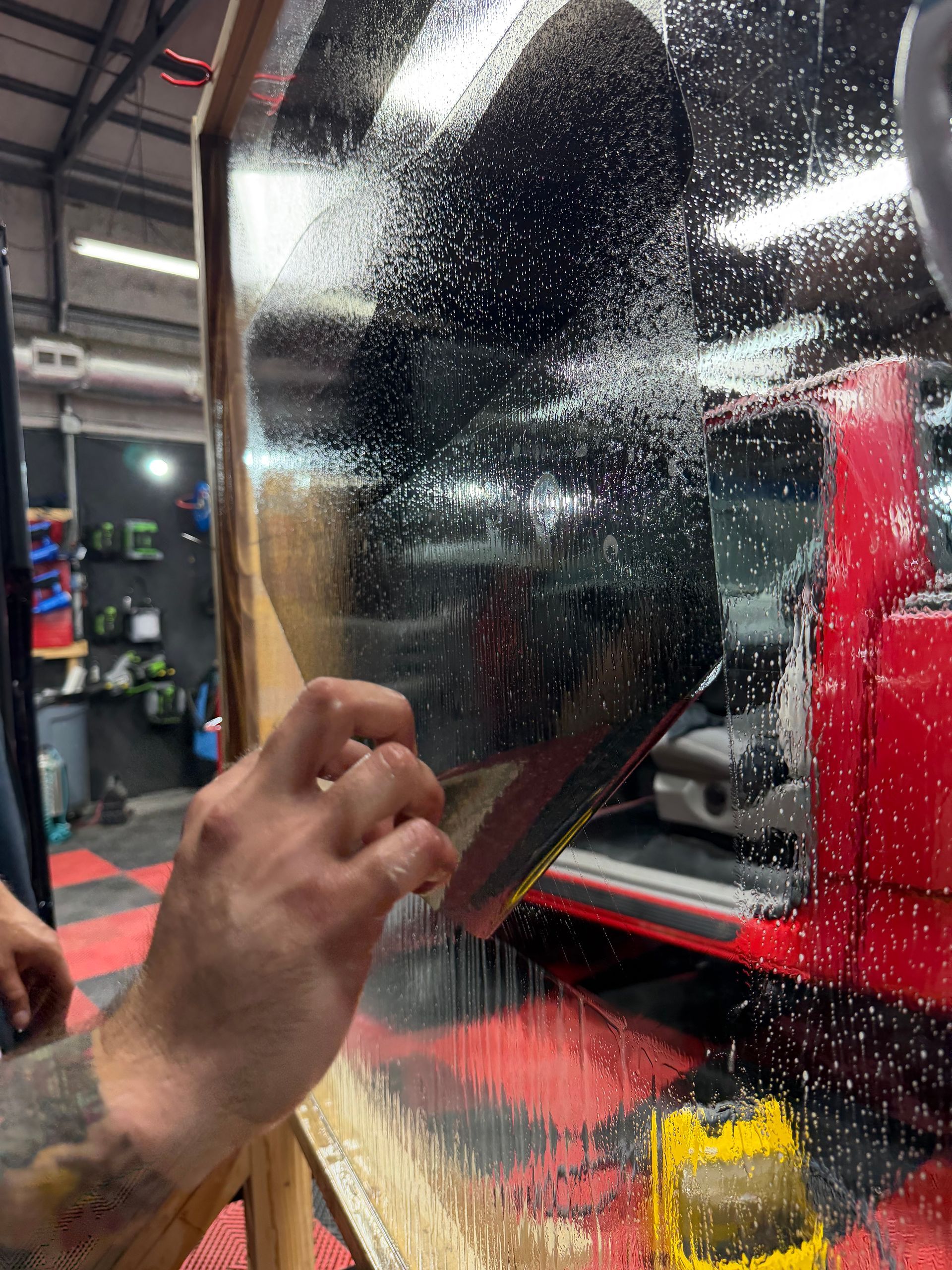
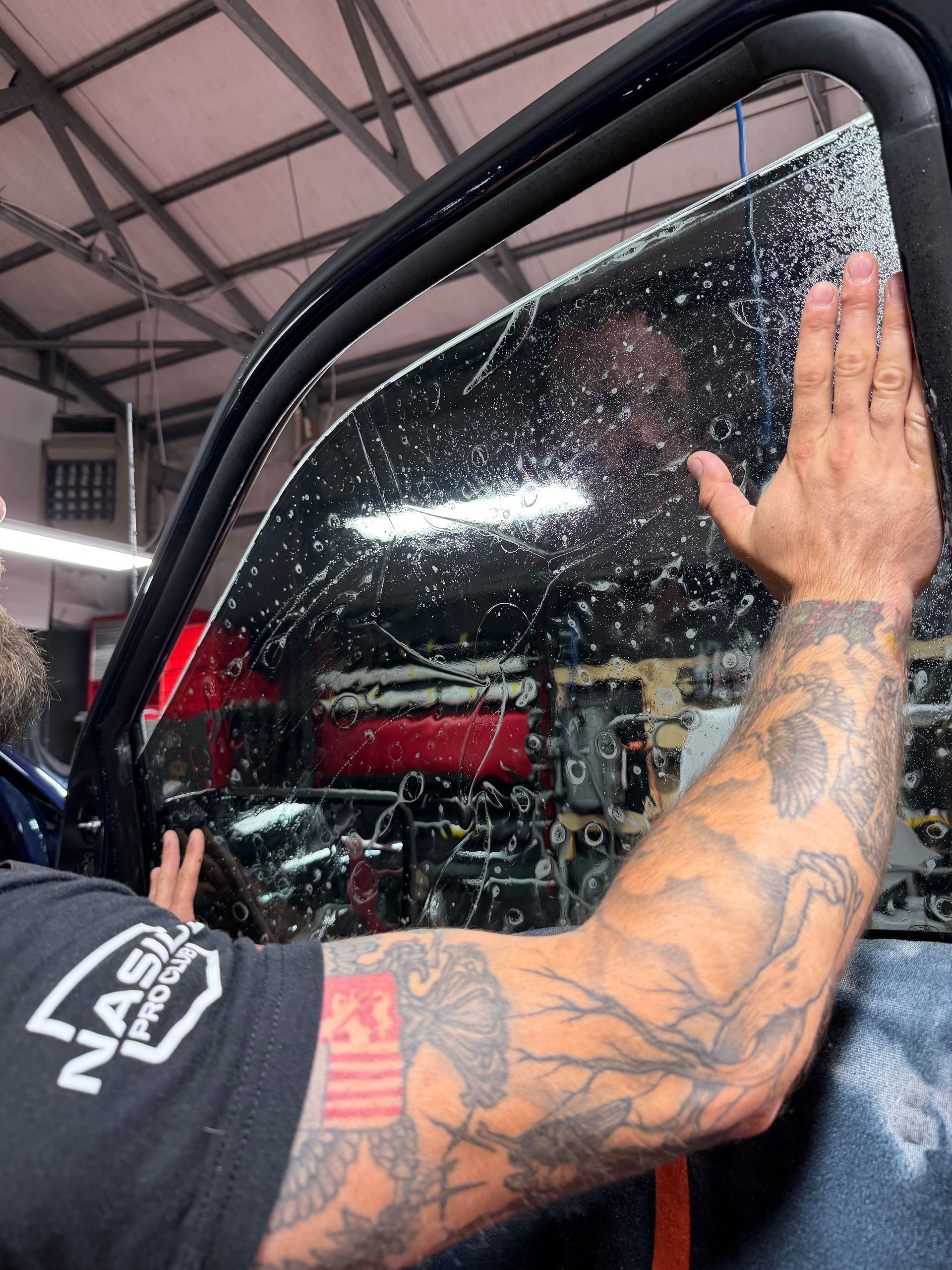
- Curved and compound glass. Rear quarter and hatch glass on modern SUVs is aggressively shaped and has to be heat formed to the panel, or it bubbles, creases, and lifts at the edges.
- Defroster lines. Rear glass has defroster elements bonded into it. Careless removal or installation damages them, and replacing that glass is expensive.
- Sliding rear windows. Common on work trucks. Each pane is handled individually, and the film is trimmed clear of the track so the window still moves. On a power slider, a caught edge can damage the mechanism.
- The small pieces. Triangular vents and quarter windows are easy to skip and let direct sun in at the wrong angles.
All of it takes longer than a sedan, which is part of why we run first come, first served with no fixed finish times. The same physics apply at a larger scale on an RV, covered by our RV detailing and coating work. And while film handles the inside, paint protection film is worth a look for the front end, since trucks around here eat rock chips on I-81 and US-11W.
The Paperwork That Keeps You Out of Trouble
Tennessee puts specific obligations on the installer, and most drivers do not know they exist until an officer asks.
A professional installer has to affix a label to the lower right corner of the driver's window showing the business name and a legend stating the work complies with section 55-9-107. You also have to be given a signed receipt listing the installation date and the make, model, paint color, plate number, and state, with a legend telling you to keep it with your registration documents.
Keep that receipt in the glovebox. The statute places the burden of proving compliance on the vehicle owner, and an officer with reasonable belief of a violation may detain the vehicle for a field comparison test. A violation is a Class C misdemeanor, and so is refusing the test.
Before booking anywhere, ask three things. Can you show me the film's heat rejection specs? What is your process for rear glass with defroster lines? Will I get the compliance label and receipt? A shop that answers all three cleanly has done this before. Keeping the film looking right afterward is covered in our window tint care guide.
Get Your Truck or SUV Tinted in Kingsport
Ideal Auto Detail has served Kingsport since 2021, certified in window tint installation alongside ceramic coating, paint correction, paint protection film, and auto detailing. We install GeoShield film with a lifetime warranty on tint installations, and we tint everything from daily drivers to tractors, construction vehicles, and heavy equipment. For a free estimate, get in touch with our team or call (423) 863-8382.
Frequently Asked Questions
Empty heading
Can trucks and SUVs have darker tint than cars in Tennessee?
Not on the front doors. Section 55-9-107 caps front door windows at 35 percent visible light transmittance for every vehicle and specifically refuses to exempt the front doors of any vehicle of any kind. Behind the driver, factory privacy glass changes the picture, so have your vehicle metered.
Does it cost more to tint a truck or SUV than a car?
Yes. More glass to cover, more film used, and more labor, because the panels are larger and more complex. Three-row SUVs and extended-body models cost the most. We quote by vehicle, so send us your year, make, and model for a real number.
Should I tint over my SUV's factory privacy glass?
Usually yes, but with a lighter film than you would use on bare glass. Factory privacy glass blocks very little infrared heat, so ceramic film adds the heat rejection it never provided. Because film stacks on top of it, the rear glass should be metered first.
How long does it take to tint a truck or SUV?
Longer than a car. More glass, more panels, and heat forming on curved rear windows all add bench time, and a three-row SUV takes longer than a crew cab. We work first come, first served with no fixed finish times, so tell us if you need it back by a certain hour.
Do you tint trucks and SUVs outside Kingsport?
Yes. We serve the whole Tri-Cities area from our shop on Fort Henry Drive, including Johnson City and Bristol. Our auto window tint page for Johnson City has more detail if you are coming from that side of the valley.